
In brief
- Autonomous systems are no longer a vision. They sail, and they rescue.
- The sea is difficult, but its problems are solvable.
- The real question is not whether the technology is coming, but whom we trust with it.
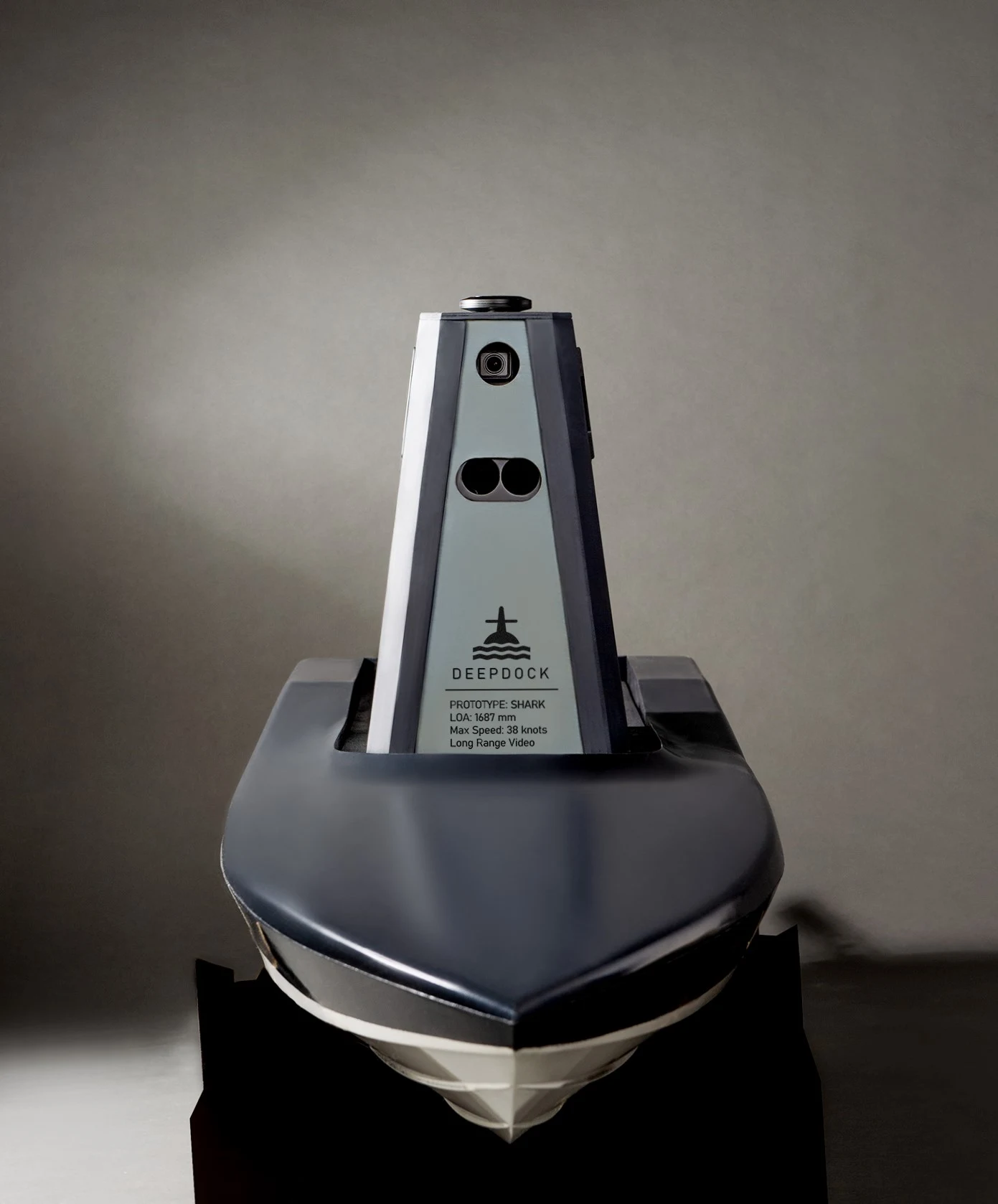
The boat in the picture above has no one on board. This article takes you out onto the water and below it. By the end it is less about boats than about a question every company knows.
01 / 15
What lies on the seabed off our coast?
From above, the western Baltic looks peaceful: sailing boats, ferries, freighters. We all have a picture of what happens on the water. Very few know what lies beneath it, even though we rely on it every day, whenever a light comes on or an email arrives.
Beneath it lie power cables to Sweden and Denmark3,4 and a data cable linking Germany with Finland.5 And in the bays of Kiel and Lübeck lies something that has been there since the world wars: munitions.
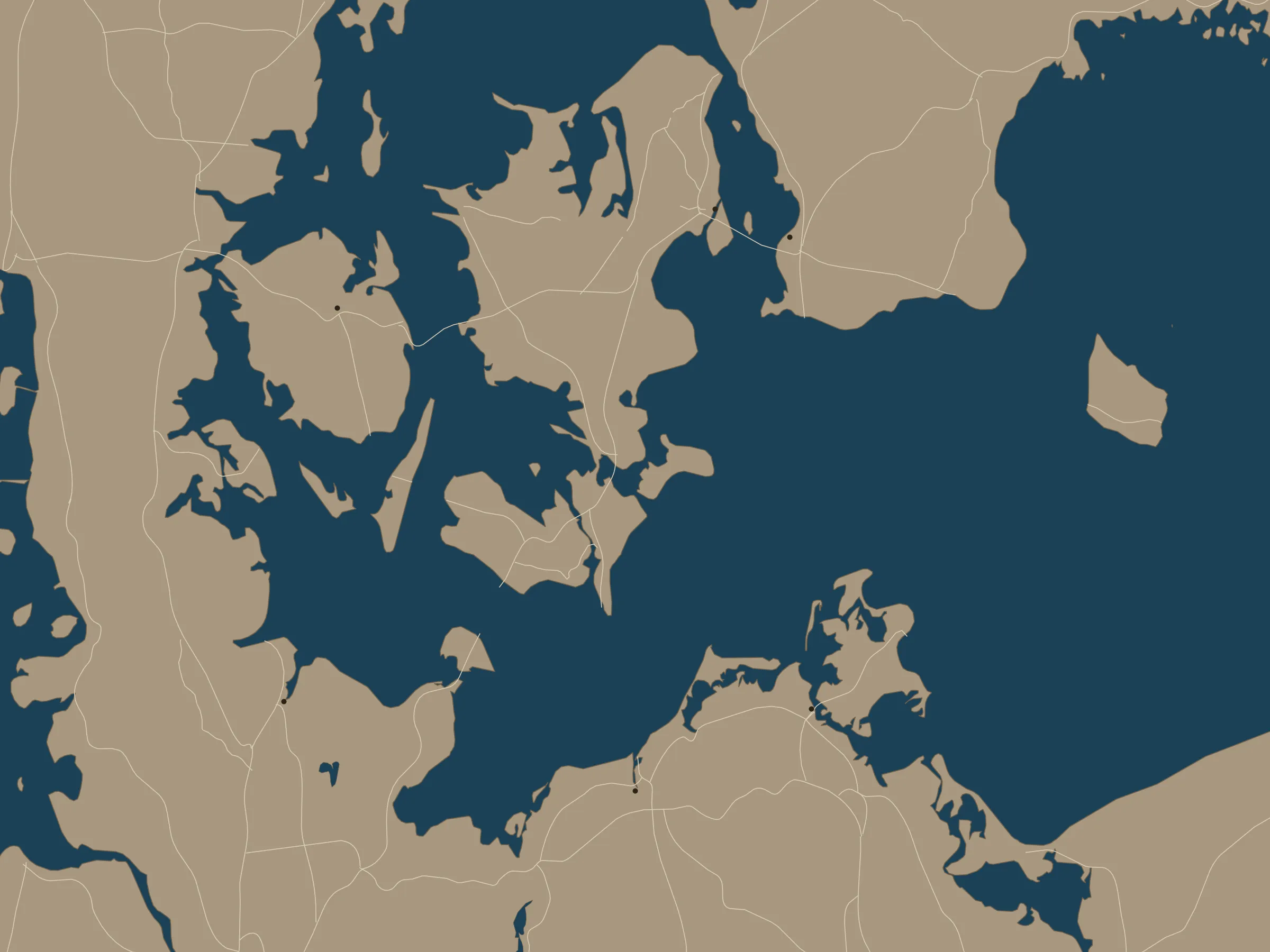 FlensburgKolberger HeideBay of LübeckBaltic CableKontekC-Lion1
This is not meant to frighten anyone. It raises a question: who is actually keeping watch down there? People cannot stay there. So we send machines. And that idea is much older than you might think.
02 / 15
1898: A boat that seemed to read minds
New York, 1898. At an electrical exhibition in Madison Square Garden, a man named Nikola Tesla shows a small boat on a pool of water. No one sits in it. No cable leads to it. And yet it obeys him. Some spectators believe he is steering it with his thoughts.7
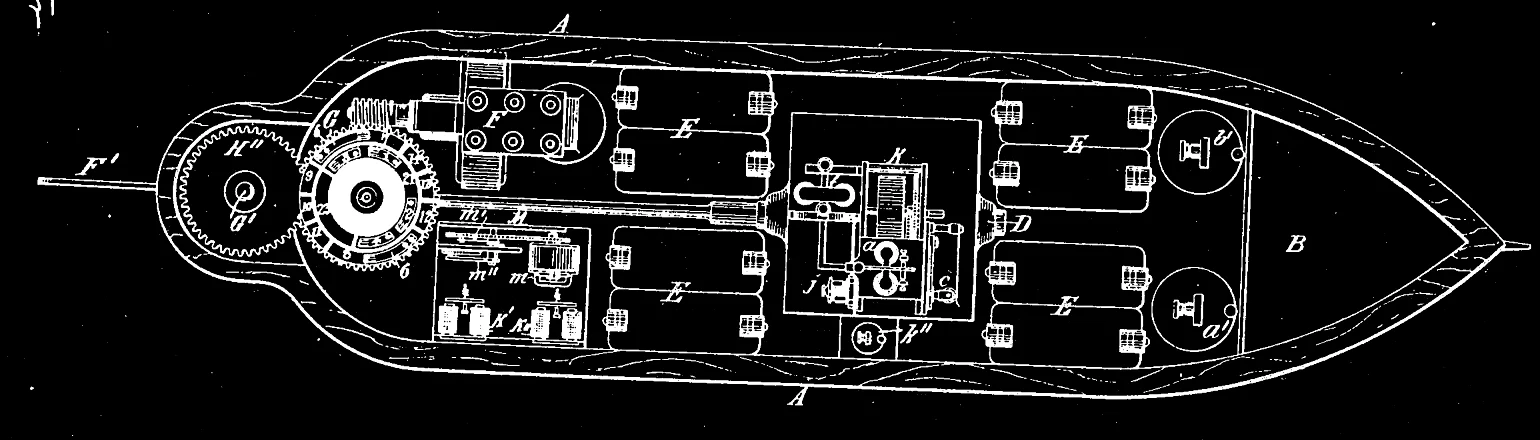
On 8 November 1898 he received US Patent 613,809 for it.6 The exciting part is in the text. The patent names rescue, cargo delivery and whaling as uses, and expects the greatest value in war. Dual use, in 1898.
When a journalist suggested putting dynamite on board, Tesla, according to PBS, replied in essence that this was no torpedo but the first of a race of robots that would take laborious work off humanity’s hands.7 The Wright brothers had not yet flown, and here was someone describing the robot as a worker.
So the idea was there. Why did it take more than a hundred years? Because sensors, computing power, satellites and good batteries were missing. The short version of what came next looks like this.
1898
A boat by radio
Tesla’s demonstration in New York.
1966
Robot on a tether
Recovers a lost bomb from about 800 m off Spain.
2021
Video from a hurricane
First footage from inside a major hurricane by an unmanned surface vehicle.
2022
Sea drones in the Black Sea
Unmanned boats become an instrument of war.
2025
Solar boat crosses the Pacific
About 150 days with no one on board.
2026
First global rules
The IMO’s MASS Code takes effect, voluntary for now.
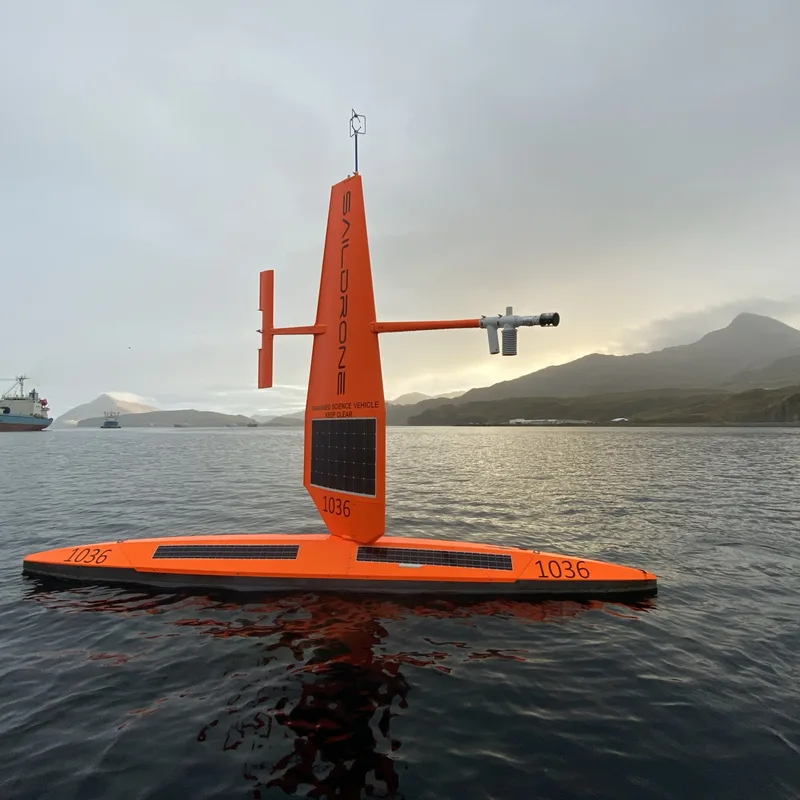
In 1966, the bomb lost off Palomares was found by a crewed submersible and recovered with CURV, a Navy vehicle on a cable, and only because the vehicle snagged in the bomb’s parachute lines.8 That famous recovery was also a stroke of luck. In 2021, a Saildrone sent back video from inside a major hurricane, in waves of about 15 metres and winds of over 190 kilometres per hour, by the manufacturer’s figures.9 No one wants to be there.
The pattern is typical of deep tech: decades of lead time, then several technologies come together at once.
03 / 15
Four types, one principle: no one on board
USV
Sails on the surface
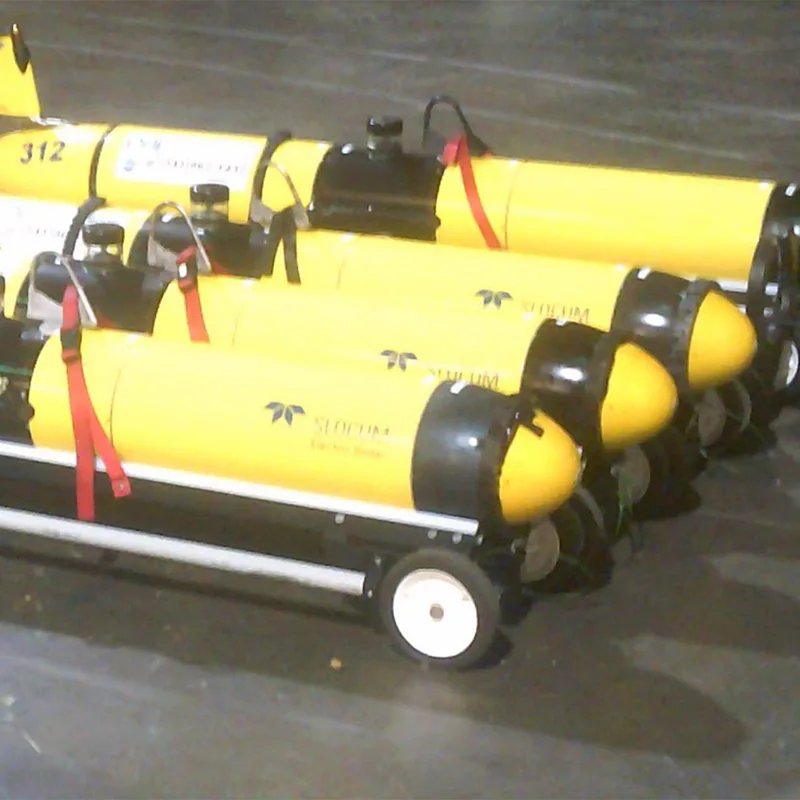
Glider
Glides on very little power
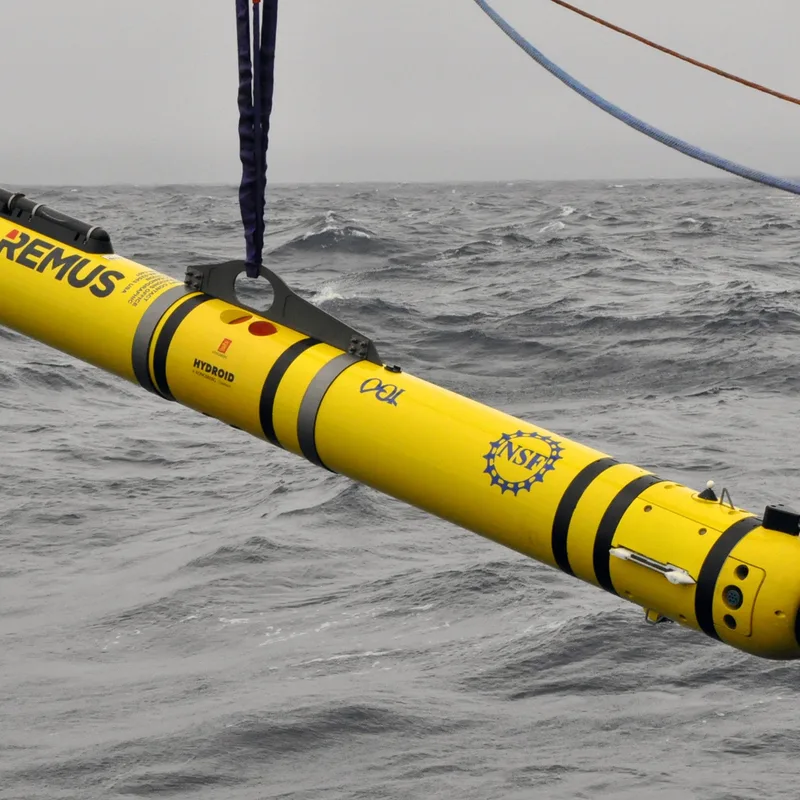
AUV
Dives on its own
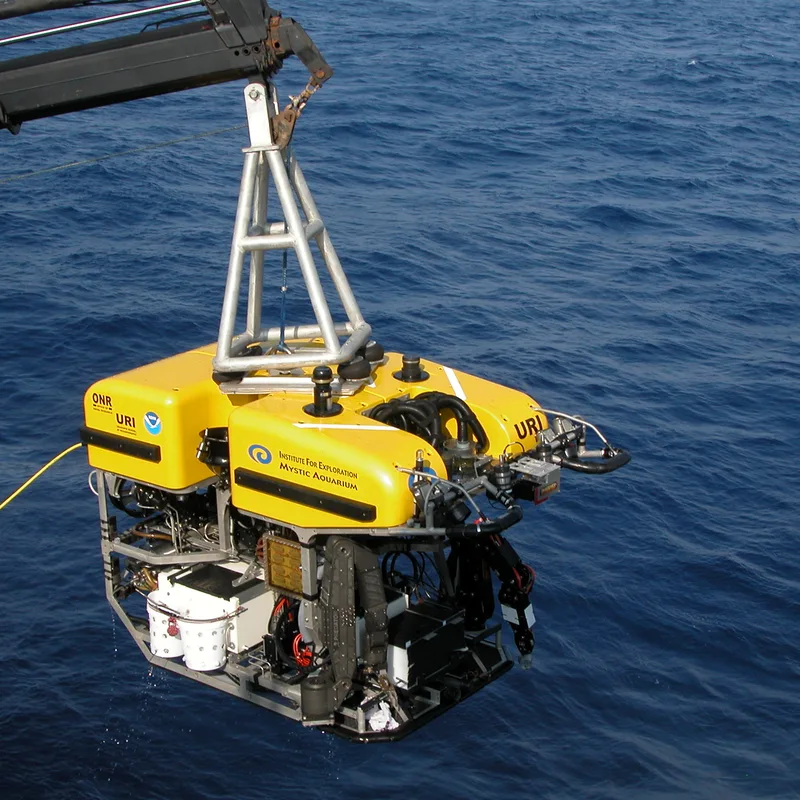
ROV
Works on a tether
The USV is an unmanned surface vehicle: a boat without people. A glider changes its buoyancy and glides through the water on very little power. The AUV, an autonomous underwater vehicle, has no cable and works through its mission on its own. The ROV is remotely operated and tethered, like the vehicle of 1966. One image helps: the ROV is the dog on a lead, the AUV is the dog that runs off alone.
What all four share is that no one has to go where it is deep, cold or dangerous. That is also the core of the economics. Once no one has to be on board, you need no cabin, no galley and no watch rota at sea, and the boat can become small. But no one on board does not mean no one is steering.
04 / 15
Remote-controlled ≠ unmanned ≠ autonomous
Three words that are constantly confused. For cars we know the levels zero to five, from no automation at all to a vehicle that drives itself in all conditions.12 The International Maritime Organization distinguishes four degrees.10
Remote-controlled
Model car
A person steers from outside.
IMO degrees 2 and 3
Unmanned
Empty bridge
No one on board. Who decides remains open.
IMO degrees 3 and 4
Autonomous
Robotaxi
The system decides for itself.
IMO degree 4
| Degree | Meaning (IMO) | Comparison |
|---|---|---|
| 1 | Ship with automated processes, crew on board | Driver assistance |
| 2 | Remotely controlled, crew on board | Crew as fallback |
| 3 | Remotely controlled, no crew on board | Captain in a control centre |
| 4 | Fully autonomous: the system decides for itself | Robotaxi |
Since 1 July 2026 there has been a first global framework: the MASS Code. It is still voluntary and aimed at cargo ships. A binding version is due by 1 July 2030 and planned to enter into force on 1 January 2032.11 For anyone entering this field that matters, because the rules are being written right now.
Who sits where? And who decides?
The two questions to ask whenever you read “autonomous ship”.
05 / 15
150 days alone across the Pacific

San Diego, 2025
The gold dot is a Lightfish, built by the US company Seasats: 3.7 metres long, about 159 kilograms, solar powered.13 It sets out from San Diego towards Hawaii.
Hawaii to Guam
On it goes, past Wake Island and Guam. There is no one on board and no filling station on the way. About 150 days in all and, by the manufacturer’s figures, more than 7,500 miles: a good 12,000 kilometres, ending in Japan via Okinawa.
Who decides?
The boat navigates autonomously, but it is monitored from shore and can be steered from there too. And the voyage was public: anyone could follow its position online and see its camera images.
Route schematic, stages per Seasats. Day count assumes an even pace
It also comes closer to home. In May 2026 the German transport minister handed over 3.3 million euros in Kiel for the project CAPTN Förde Areal III: an electric, autonomous on-demand ferry across the Kiel Fjord, linked to a connected bus. The ministry has not yet named a start date.14 But this is no Silicon Valley. It is our neighbourhood.
So the technology is coming. And at the same time, it is needed.
06 / 15
Over 99% runs through a garden hose
Every video call overseas, almost every international transfer, your company’s cloud. The fibres inside are as thin as a hair. And the biggest danger is not a saboteur. The industry counts around 200 cable faults a year worldwide on average.18 Most do not happen in the deep sea but in shallow water of less than 100 metres,16 and the Baltic is a shallow sea with a great deal of traffic.
Everyday life is the main enemy. That does not make the question smaller. It makes it harder: how do you tell an accident from intent?
07 / 15
Not every anchor is sabotage. Every one hits us.
That is exactly what the Baltic is living through.19,20 Select an incident to see where things stand.
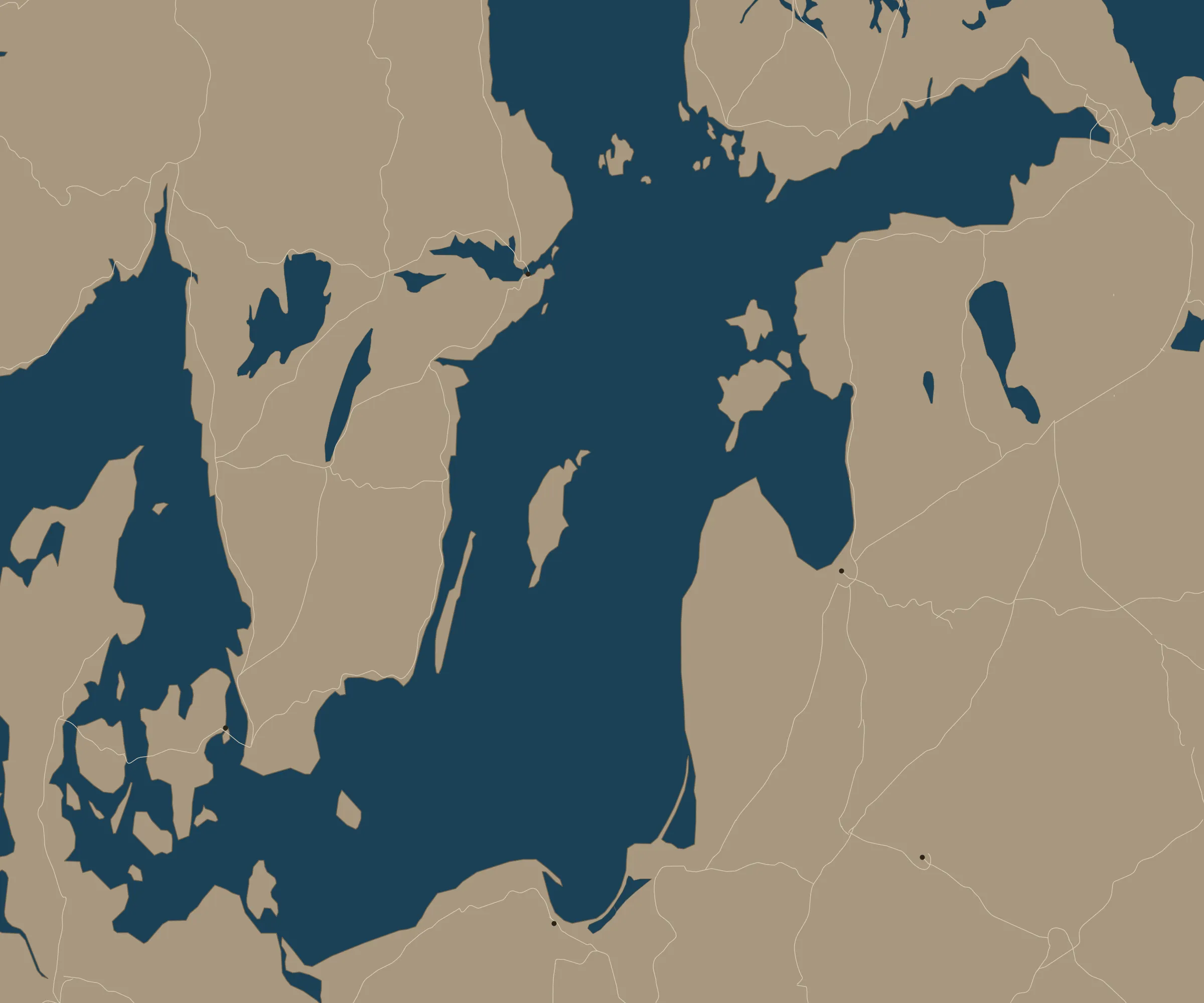 Flensburg
NATO responded in January 2025 with the mission Baltic Sentry, explicitly including a small fleet of naval drones.21 A defence alliance is turning to drones to protect cables, and the reason is obvious: no one can guard thousands of kilometres of line with frigates alone. Which leaves the question: does it actually work?
08 / 15
Does it work? Ask two pilots
Animated reconstruction · 1:34 · No sound
01/9 Title · 1:34 left
Yes, and since 2026 in rescue too. On 8 June 2026, off the coast of Oman near the Strait of Hormuz, a US Army Apache helicopter crashed, leaving two pilots in the water. US Central Command confirmed that an unmanned boat of the type Corsair took part in the rescue, built by the US company Saronic and operated by Task Force 59.22
The unit had brought these boats to the region only at the end of March. The boat, about seven metres long, took both pilots on board and carried them to a point where a helicopter could hoist them up. Within about two hours both were safe. To be clear: how much the boat decided by itself and how much people at a screen decided is not publicly known, and the cause of the crash is still under investigation.
The second piece of evidence is more serious. In autumn 2024, according to Reuters, a Russian official confirmed the transfer of warships from Sevastopol and said the large ships had become nothing more than large targets for unmanned boats.23
Both show that this is no longer a vision. So why is it still so hard?
09 / 15
The sea has no road signs
Many people think: if cars can drive themselves, boats must find it easier. There is plenty of room on the water. The opposite is true.
Road
Sea
Lanes, signs, buildings
Everything looks the same
Mobile coverage almost everywhere
Radio ends after a few dozen kilometres
A workshop round the corner
Weeks alone with salt and swell
At sea, radio typically reaches only a few dozen kilometres, and after that there is the satellite.24 If something unexpected happens, no one can just take a quick look. Then there are the rules of the road: the collision regulations demand a proper look-out at all times, literally by sight and hearing.25 They were written for people, not algorithms.
Seeing is hard too. A kayak or a drifting container disappears between two waves, and the radio signal ships identify themselves with can be switched off. A person on the bridge reads this from experience. A machine first has to learn it. And GPS, with its clear view of the sky? This is where the Baltic comes in.26
Reported GNSS disturbances, Swedish airspace
2023full year
2025to end of August
The navigation system lies exactly where we live. And that is only the surface.
10 / 15
Radio silence under water
Let’s dive. Keep scrolling, and watch what falls away.
Radio
Under 10 metres
That is how far radio typically reaches under water.27 No mobile network, no satellite, no GPS. A diving robot works out its position from motion and time, and grows less accurate by the hour. It is like counting your steps blindfolded.
Sound
50 kbit/s
What remains is sound. In water it travels at about 1,500 metres a second, over four times as fast as in air.28 But the data rate is tiny: over 500 metres, acoustic modems manage 50 kilobits per second at best, less than a 56k modem from the nineties.27 Sending a photo becomes a project, so a robot down here has to decide for itself.
Pressure
Nearly a tonne
At 6,000 metres the pressure is about 600 bar. On your thumbnail, that is nearly a tonne: the weight of a small car.
Maps
28.7%
And we barely know the way. Only 28.7 percent of the seabed has been mapped to modern standards.29 All of this is hard, but it is solvable. These are engineering problems. The real problem lies elsewhere.
11 / 15
Who else is on the line?
Imagine you have done everything right. You built the boat, followed the rules, tested the sensors. In August 2026 the British press reported on drone boats of the Royal Navy: during a routine cyber check, cameras from a supplier were said to have been regularly sending signals to an IP address in China.30
It is worth staying with what is established.
- Press reports
- Cameras are said to have sent signals to an IP address in China.
- The ministry
- Confirms a problem with a subsystem. No indication that data left the system.
- The manufacturer
- The cameras were compliant. Individual components came from outside the UK.
The good news is in the story itself: this was found not through a scandal but through a routine check. Checking works. No one needs to assume bad intent, and this is not about one manufacturer. It is about the question behind it, and that question applies to every camera, every router and every controller in your own operations. Do you know what is inside your components? And who else knows?
12 / 15
Sovereignty starts with the bolt
A chain is as strong as its weakest link. That is an old saying. What is new is that many companies no longer know their links. A drone boat needs magnets in its motor, battery cells, sensors, chips.
That is no accusation, it is market reality. And it shows the problem: the critical point is rarely the boat. It is the part within the part within the part, three suppliers further down.
This is not a military topic. For a talk hosted in a brewery, the closest example is in the glass: in October 2022, only 30 to 40 percent of the usual carbon dioxide supply was available in parts of Germany, and some drinks makers had to scale back. Beer needs reliable suppliers just as much as a drone boat does. Resilience is a business topic.
The answer is not self-sufficiency. No one will turn every bolt themselves. The answer is transparency: knowing what is built in and where it comes from, having a second source for what is truly critical, and checking regularly rather than only trusting.
13 / 15
We can do big ships. And the small ones?
In large-scale shipbuilding, northern Germany plays in the top league. For small, unmanned boats, things were thin for a long time. That is changing now, and it is changing here.
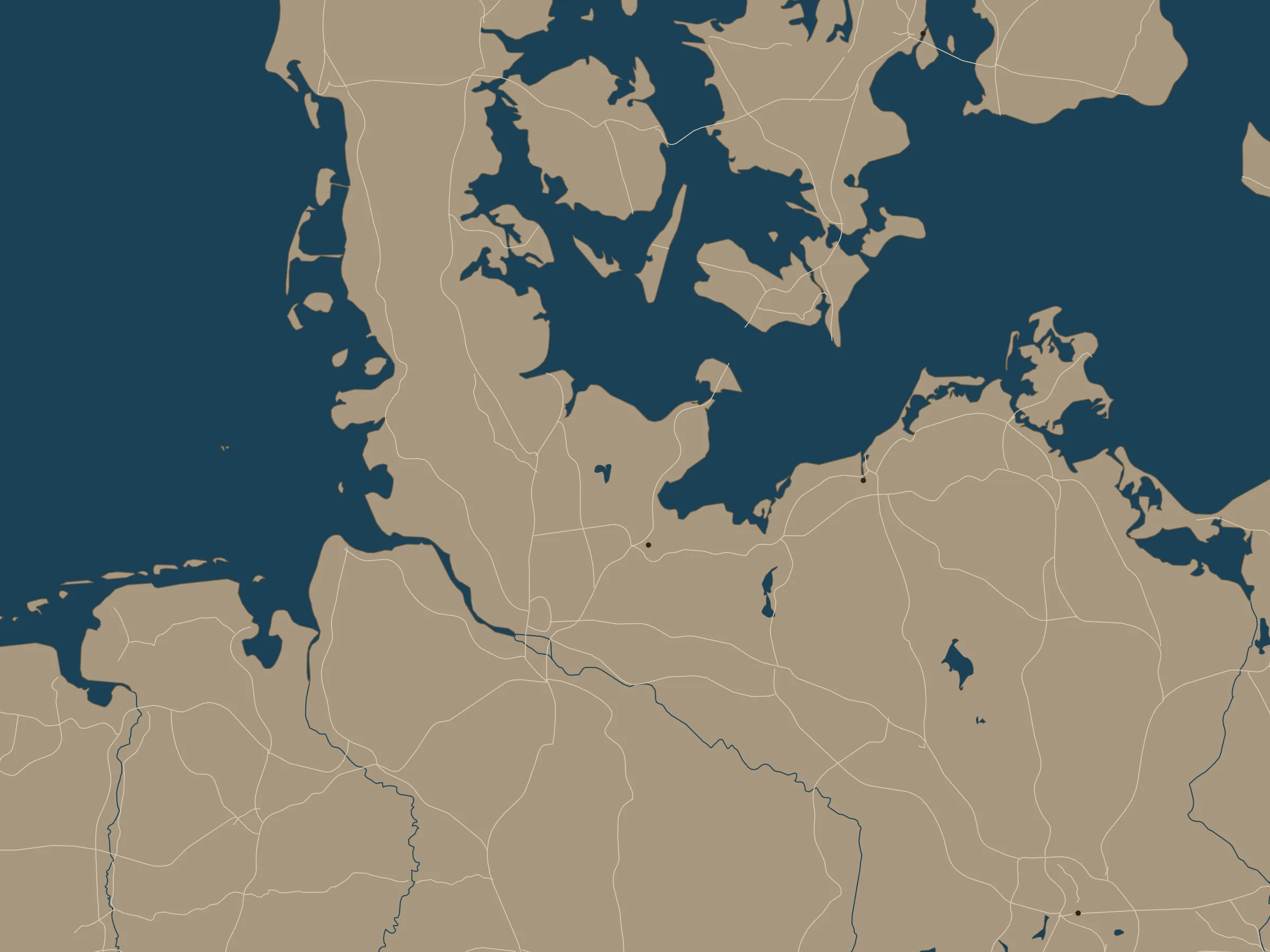 PapenburgBremenKielWolgastHamburg
Series productionFlensburg
Letter of intent
In April 2026 Rheinmetall and a British partner started series production of unmanned boats at Blohm+Voss in Hamburg: about 200 a year to begin with, up to 1,000 depending on demand.34 In early September it emerged that the Berlin company STARK and Flensburger Shipyard had signed a letter of intent to build drone boats together in Flensburg. That is a first step, not a contract.35 And in August the Bundeswehr christened its first reconnaissance boat of this kind in Kiel, the Seetaube, largely autonomous and under human supervision.36
Flensburger Shipyard has been part of the Rönner Group since early 2025 and is also building the hull for DLR’s research vessel Modularis.37 With research on the doorstep, from GEOMAR in Kiel to DLR, the window is open. And not only for navies.
14 / 15
One drone, many jobs
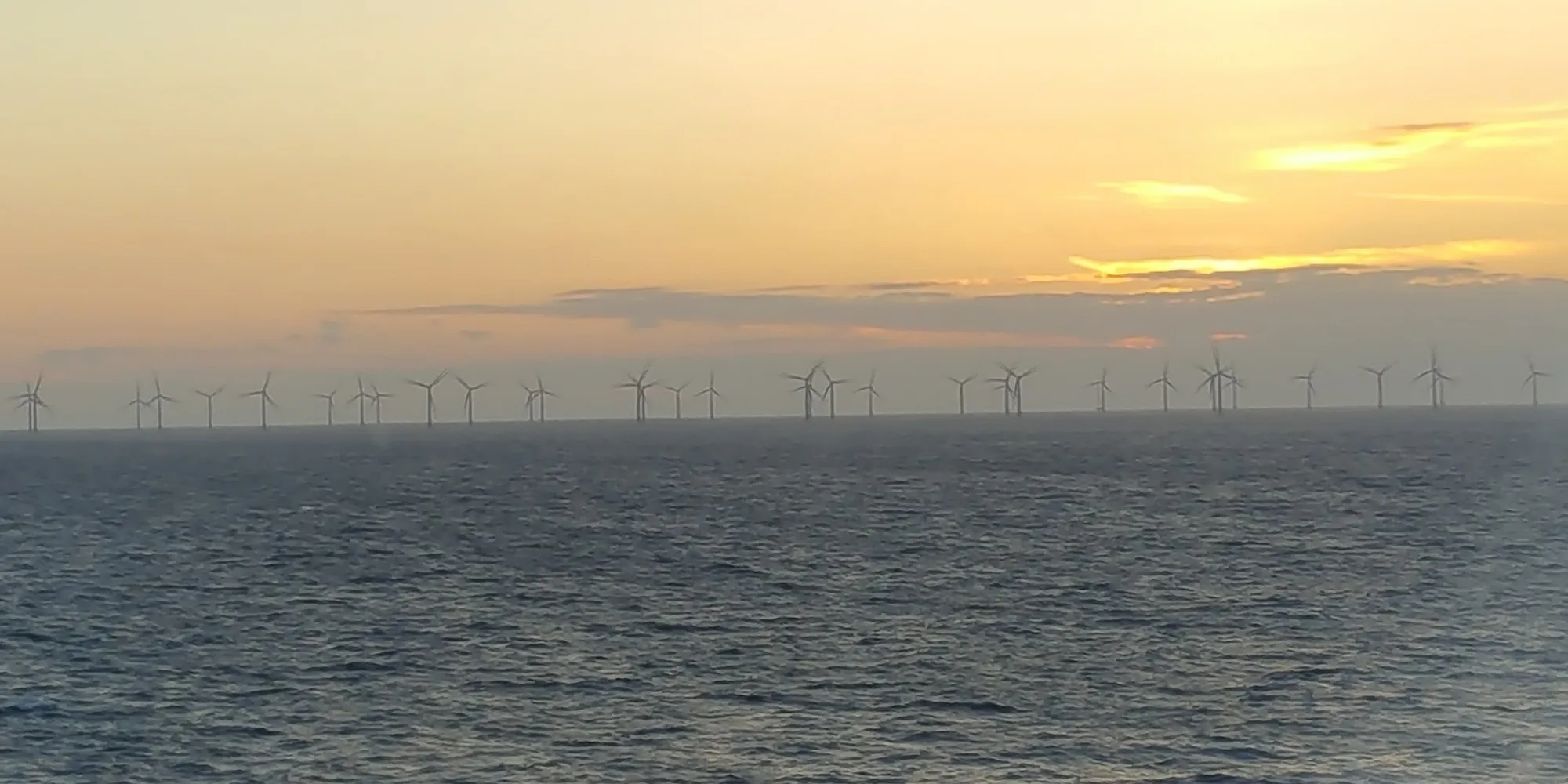
The real opportunity is dual use. The same platform that guards a cable can inspect a wind farm, watch over a port, gather data for research or help with surveying.
Offshore wind
Inspection without a crew
Cables and pipelines
Regular checks
Ports
Surveillance around the clock
Munitions in the sea
Searching 1.6 million tonnes
Search and rescue
Finding and recovering
Surveying
Over 70% of the seabed still to map
These are not finished products, they are tasks: dangerous, tedious or expensive ones, where people gladly keep their distance. Around them, markets are forming for sensors, software, maintenance, data and insurance. Many of these need no ship, but know-how. Anyone who monitors pumps today, automates processes or secures supply chains can do the same for autonomous systems.
Who is writing
Getting people out of harm’s way
DEEPDOCK is a deep-tech research project for autonomous maritime systems. We work on swarms of unmanned boats, AI-based vessel recognition and mission software. In 2025 we won a hackathon in Copenhagen, against more than 25 teams from across Europe.
15 / 15
Three questions for your business
- 1
Which jobs or places in your company are too dangerous, too dirty or too hard to reach for people? Maybe a machine can go instead.
- 2
Which of your supply chains has a link you do not control? Bottle cap or camera, the principle is the same.
- 3
Which civil task in your industry could an autonomous drone take on?
Tesla had the idea in 1898, but not the world for it. We have both, right on our doorstep. If you have an answer to any of these questions, we would like to hear it.
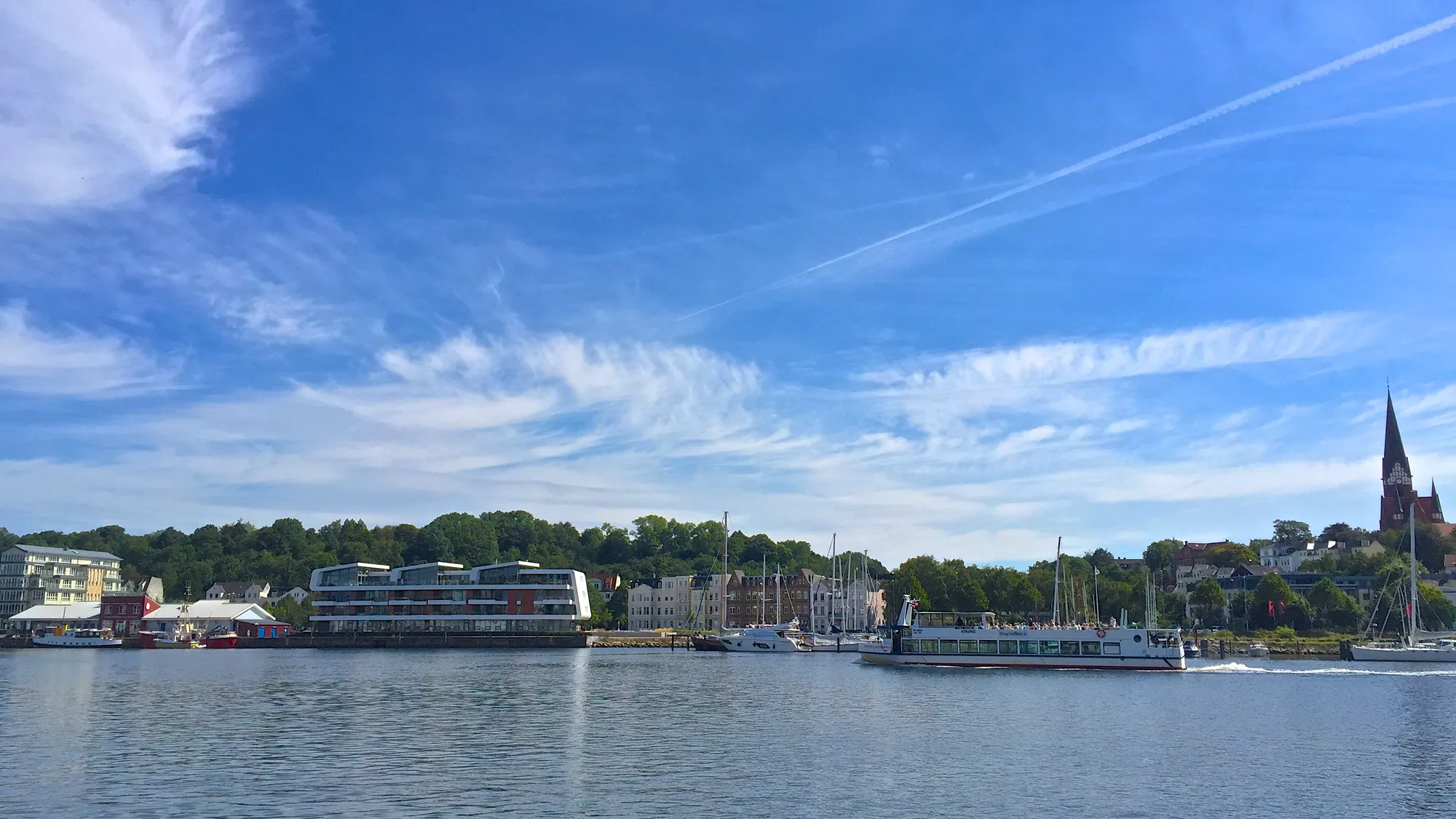
Flensburg harbour. Photo: www.fleno.de, CC BY-SA 3.0
Sources
Status as of November 2026. Pressure on the thumbnail is our own calculation. Manufacturers’ figures are marked as such.
- 1German Environment Agency (Umweltbundesamt): Munitions in the sea, as of 19 May 2026
- 2Frey et al., Earth System Science Data 18, 5563 (2026)
- 3Wikipedia: Baltic Cable
- 450Hertz: Kontek 400 kV grid connection
- 5DCD: Cinia completes submarine cable between Germany and Finland
- 6US Patent 613,809, Google Patents
- 7PBS: Tesla, Life and Legacy
- 8WHOI Oceanus: Little Alvin and the lost H-bomb
- 9Saildrone press release (manufacturer’s figures)
- 10IMO MSC.1/Circ.1638
- 11IMO: IMO adopts MASS Code
- 12SAE J3016 levels of driving automation
- 13Seasats press release, 31 July 2025 (manufacturer’s figures)
- 14German Federal Ministry of Transport, press release 046/2026
- 15TeleGeography: Mythbusting 2023, part 3
- 16ICPC: Submarine Cable Protection and the Environment, March 2021
- 17TeleGeography: Submarine cable FAQs
- 18Submarine Networks: Statistics on subsea cable fault and repair (citing ICPC)
- 19Reuters factbox via Baird Maritime: Suspected underwater cable sabotage in the Baltic Sea
- 20The Record, 27 August 2026: Finland appeals court revives case against Eagle S
- 21NATO, 14 January 2025: NATO launches Baltic Sentry
- 22DefenseScoop, 9 June 2026: Autonomous maritime drone rescues Apache pilots after crash
- 23Reuters via The Star, 21 October 2024
- 24BoatUS Foundation: Marine communication basics
- 25COLREGs Rule 5, German text at gesetze-im-internet.de
- 26BBC, citing the Swedish Transport Agency, 2025
- 27Aman et al., arXiv 2203.02667 (2022)
- 28NOAA fact sheet: Basics of underwater sound
- 29IHO, 28 April 2026: Global seabed mapping reaches new milestone
- 30TWZ, 10 August 2026, citing press reports and the UK Ministry of Defence
- 31IEA: Rare Earth Elements, executive summary
- 32IEA: Global EV Outlook 2025, electric vehicle batteries
- 33Lebensmittel Praxis, October 2022
- 34Rheinmetall, 20 April 2026
- 35ESUT, 2 September 2026
- 36ESUT, August 2026: Seetaube
- 37DLR, 2026: Construction begins on DLR’s seagoing technology platform
Images
- Shark prototype: DEEPDOCK. All rights reserved.
- Saildrone (USV): NOAA & Saildrone. Public domain.
- Glider: Ocean Observatories Initiative. Public domain.
- AUV: Ocean Observatories Initiative. Public domain.
- ROV Hercules: Brennan Phillips. Public domain.
- Baltic wind farm (cropped): Molgreen. CC BY-SA 4.0.
- Flensburg harbour (cropped): www.fleno.de. CC BY-SA 3.0.
- Patent drawing, US 613,809 (inverted): Nikola Tesla, 1898. Public domain.
- Maps: DEEPDOCK, based on Natural Earth. Public domain base data.